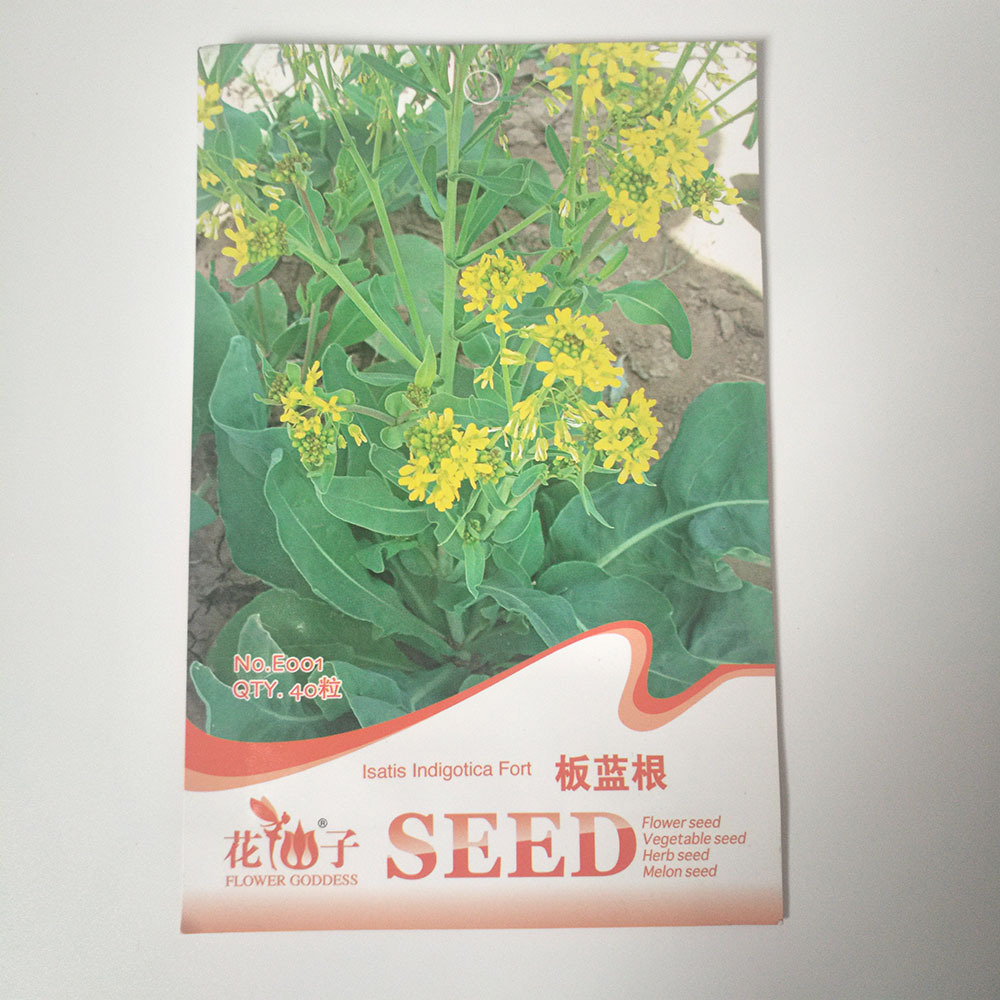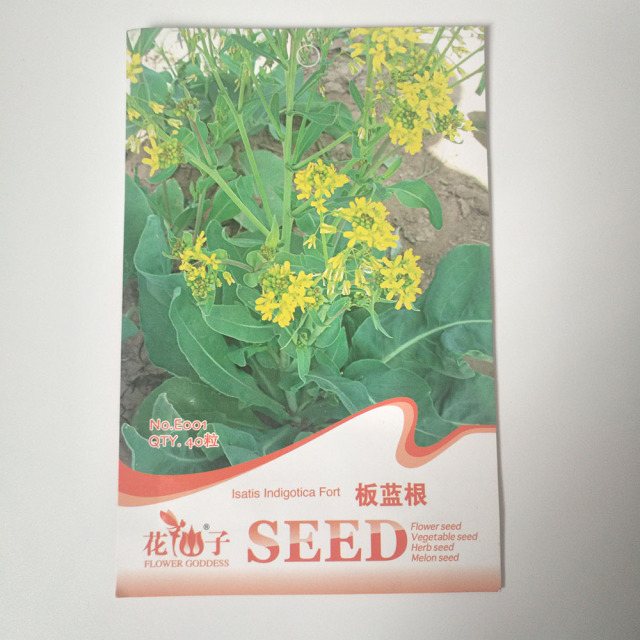
Isatis indigotica is a robust biennial herb producing broad dark‑green basal foliage, and clusters of bright small‑yellow blossoms in its second growing season. Both its leaves and thick taproot are well‑known medicinal raw materials. This plant shows excellent cold‑resistance and adapts to a wide range of growing environments. Growing isatis indigotica on well‑drained ground can effectively avoid root rot caused by accumulated rainwater. It is a practical choice for gardeners building a dedicated medicinal herb garden, requiring minimal daily care once fully established.
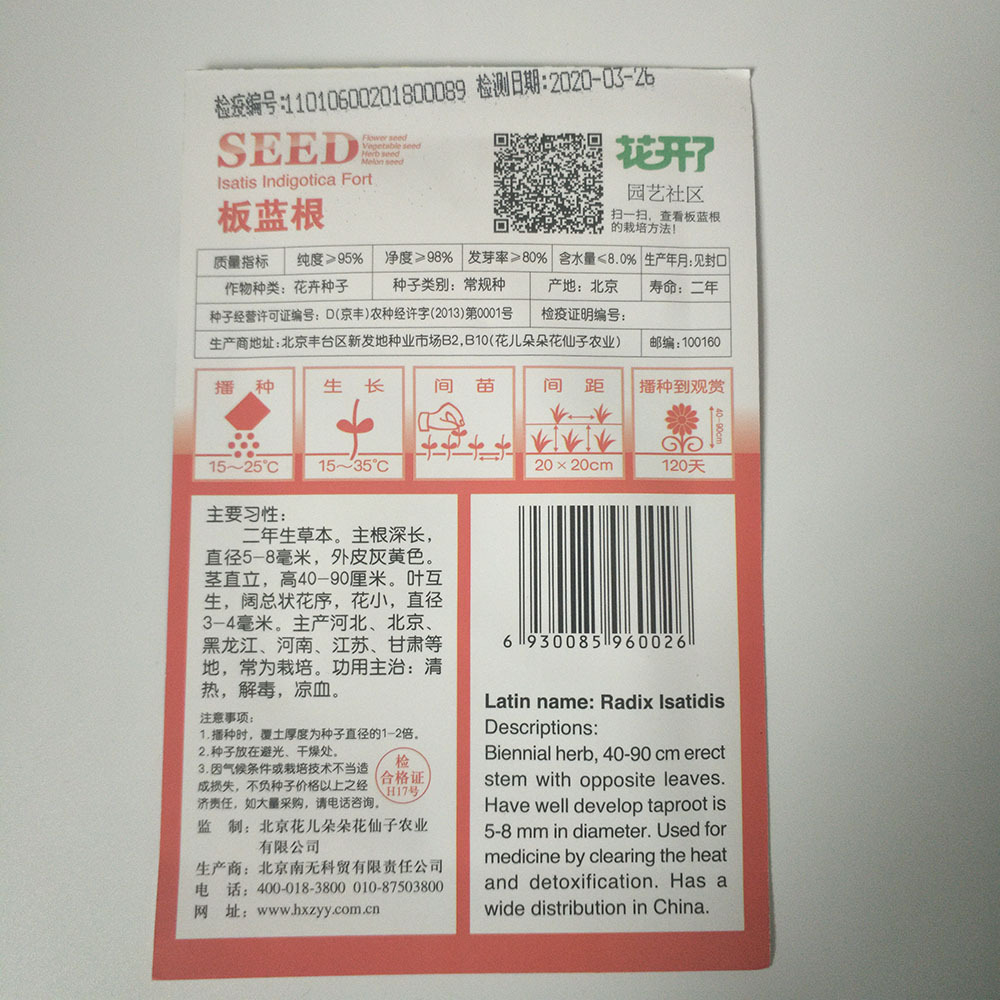
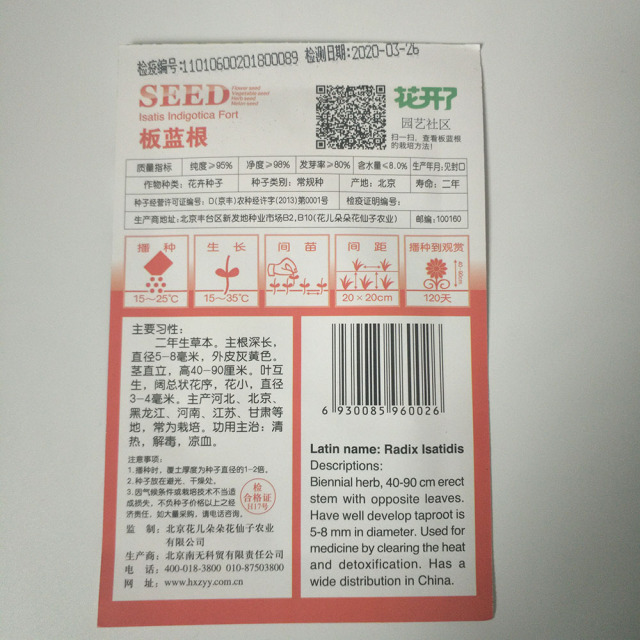
These medicinal herb seeds prefer full‑sun exposure. Soggy heavy clay soil greatly increases root‑rot risk. Moderately fertile soil brings stable growth; excessive fertilizer may encourage over‑lush leaf growth at the expense of taproot development. Planting Instructions Specifications Botanical: Isatis indigotica Growth cycle: About 220‑260 days for root‑harvest Germination rate: ≥75% Storage: Keep seeds sealed in cool dry place away from sunlight
Planting Guide Select open sunny growing locations. Loose sandy‑loam soil with good drainage is ideal; low‑lying water‑retentive land should be avoided. Soil pH keeps well within neutral‑slightly alkaline range. Sow seeds in spring or autumn. Sow into shallow furrows, cover seeds with thin fine soil. Direct field sowing is recommended. Keep 20‑30 cm spacing between plants. Optimal germination temperature:15‑23°C, maintain even soil moisture, germination takes 8‑16 days. Water moderately, avoid long‑term soil waterlogging. Apply balanced compound fertilizer one or two times during growth cycle. Keep planting bed free of weeds. Watch for aphids and leaf spot disease. Harvest taproots in autumn of the first or second growing year.
FAQ Q: Can isatis indigotica survive cold winter? A: It has strong cold hardiness and can safely overwinter in most temperate regions.
Q: Can it grow in pots? A: Deep large‑size pots are required, shallow containers restrict taproot development.
Q: When to collect isatis indigotica roots? A: Taproots are normally harvested in late autumn after full‑season growth.
Q: Does it self‑sow easily? A: Yes, it can drop plenty of seeds; remove spent flower‑stalks if you do not want self‑sown seedlings.